Frederick S. Kelly
| Frederick Septimus Kelly was born on 29th May 1881 in Sydney, New South Wales, the youngest of seven children of Thomas Hussey Kelly and Mary Ann (née Dick). Of his siblings, Carleton (born 1872), Thomas Herbert (1875), William Henry (1877) and Mary (1879) survived to adulthood, while two others died in infancy. His father began as a wool broker before expanding his interests to become director of several multinational corporations, including the Union Bank of Australia. | |||||
|
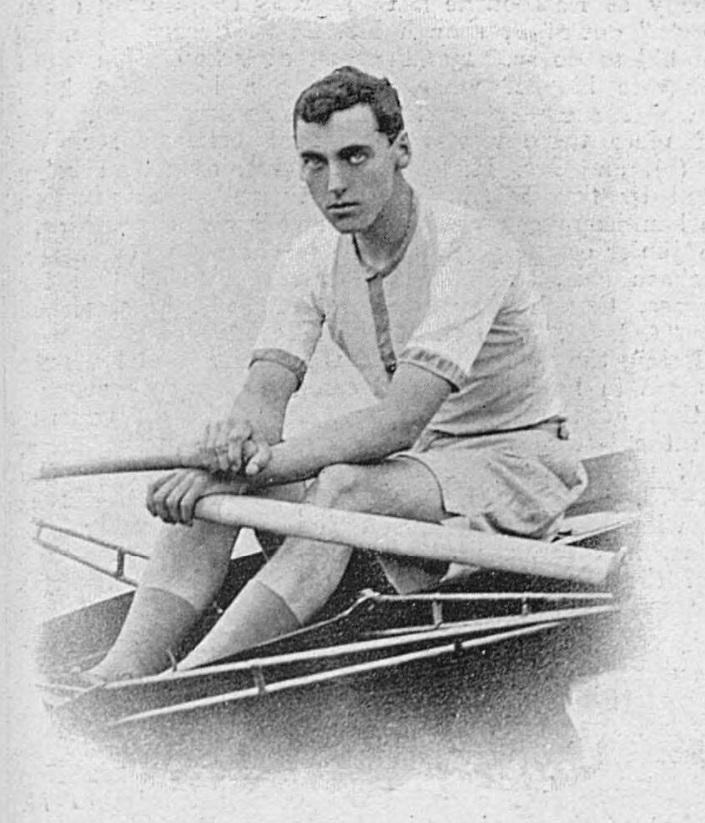
Frederick’s musical gifts were evident from childhood, and he grew into a pianist of considerable reputation. Between 1893 and 1899 he was educated at Eton. In 1901 both his father and eldest brother died, followed by his mother in 1902. After these losses, he resumed serious musical study and from 1903 attended the Hoch Conservatory in Frankfurt. Alongside music he was an outstanding sportsman, particularly as a rower, winning the Grand Challenge Cup at Henley in both 1903 and 1905. In 1907, Frederick wrote in his diary of his ambition ‘to be a great player and a great composer’. The following year he achieved Olympic gold as a member of the British eight at the 1908 Games. In receipt of a substantial inheritance, he purchased Bisham Grange, a manor house on the banks of the Thames in Berkshire, where he lived with his beloved sister Mary, herself a fine pianist and singer for whom he composed a number of works. Frederick went up to Balliol College, Oxford, in 1909 as a Lewis Nettleship Musical Scholar. Taking up sculling, he was regarded as one of the finest “skulls” of his generation, praised for “a poise and effortless technique unrivalled by any of his contemporaries”. His devotion to both music and sport came at the expense of his academic studies, and he graduated with a fourth-class honours degree in history. He nevertheless performed widely in private and public concerts in both England and Australia. Although his compositions later fell into relative obscurity, the Australian War Memorial has worked to revive interest in his music. |
 |
||||
 | |||||
|
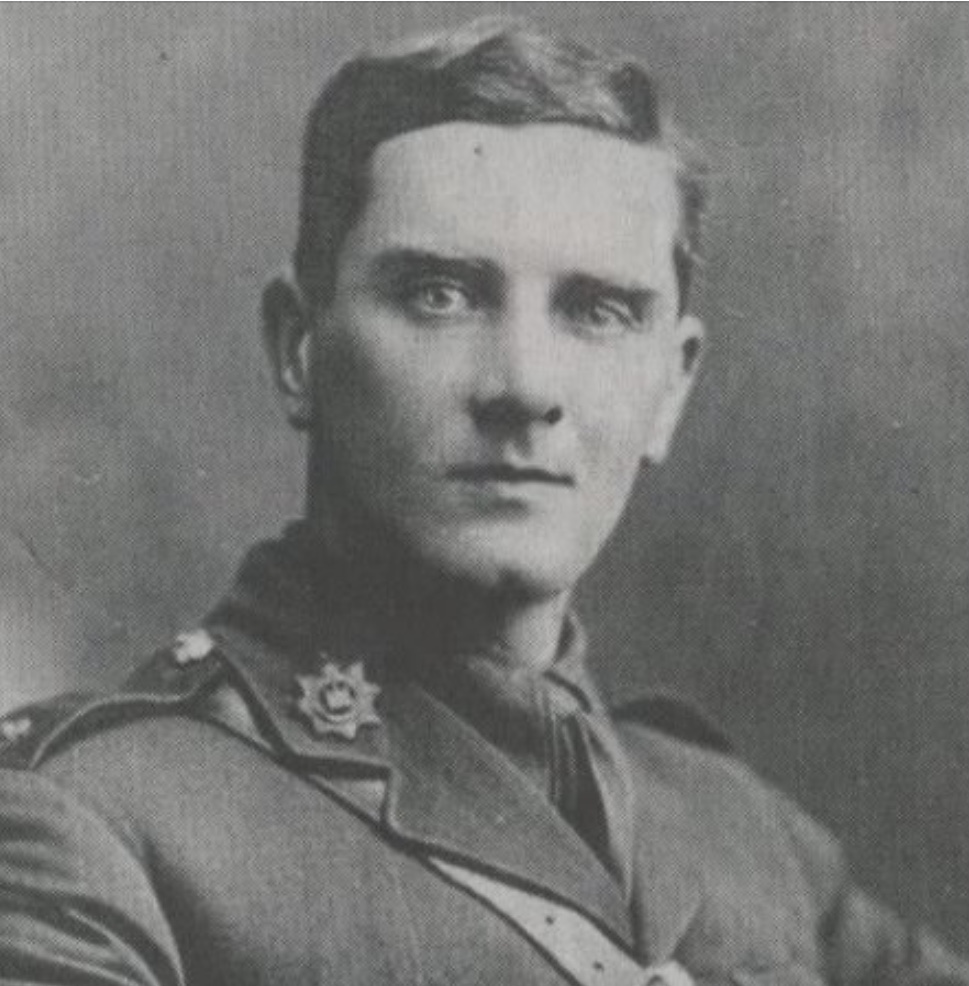
After the outbreak of war, Frederick was commissioned as a Sub-Lieutenant in the Drake Battalion on 29th September and first saw action at Gallipoli, transferring to Hood Battalion in February 1915. On the death of Rupert Brooke, he began composing his Elegy for Rupert Brooke, a work he would complete later on the Western Front. In the trenches he was remembered for wearing gloves to protect his pianist’s hands. Frederick received a ‘slight’ wound at Gallipoli on 4th June, when shrapnel struck his right heel during the fighting. He was evacuated to Alexandria to recover, returning to the peninsula in July. On 7th June he was promoted to Lieutenant. In December he recorded a narrow escape in his diary: “Very nearly came to an end, I was talking … when a shell pitched in a dugout ... about 35 yards away. We went along to lend assistance to a few men who were wounded and, as we stood there, a second shell exploded a couple of yards away from me, blasting me with stones and earth – which stung like blazes. By chance, I only received a scratch on my neck.” | |||||
 |
On arrival in France, Frederick was promoted to Lieutenant-Commander and given command of a company in the newly formed 2nd Hood Battalion. At Bully-Grenay he was set to work improving the Hood Battalion band, famously arranging a performance of Tchaikovsky’s 1812 Overture so that its climax coincided with a dawn artillery barrage. On 6th September he was gazetted for the award of the Distinguished Service Cross:
Following the Battle of the Ancre, Frederick’s second-in-command, Lieutenant John Bentham, wrote that “Kelly seemed insistent that he would not survive”. During the fighting he was shot through the back of the head. Lieutenant-Colonel Bernard Freyberg later recorded: | ||||
Frederick’s surviving men carried his body back across no man’s land as a mark of their respect, so that he might be properly buried. He now lies in Martinsart’s British Cemetery. Note - Several sources state that Frederick took part in the defence of Antwerp. However, despite being a member of the Royal Naval Division at the time, his service record shows entitlement only to the 1914–1915 Star; service in Belgium would have qualified him for the 1914 Star. Officers’ records also usually note ‘served at Antwerp’ where applicable, yet no such entry appears on Frederick’s file, making his presence there doubtful. | |||||