Victor L. A. Campbell
|
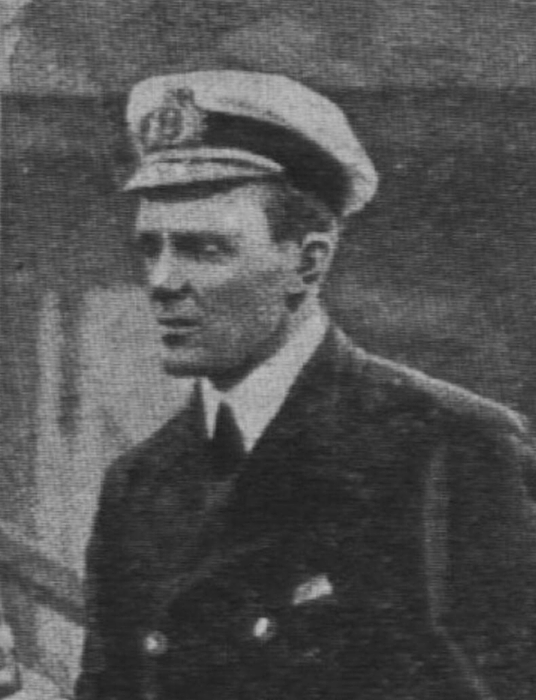
Victor Lindsay Arbuthnot Campbell was born on 20th August 1875 at Brighton to Hugh Campbell and Lucy Eleanor (née Archer). He had two older siblings: Eleanor (1870) and Alfred Corkran (1872). After being educated at Eton he entered the Merchant Navy. In 1895, Victor was granted a Royal Navy commission and entered the service as a Sub-Lieutenant at HMS President on 31st October 1895. From March 1896 to December 1898 he was stationed on the Comus-class corvette HMS Cordelia. In August 1898 he was promoted to Lieutenant. For the first four months of 1899 he was stationed at HMS Vernon, the torpedo and mining training school, and on leaving the school embarked on HMS Vulcan, the 6,600-ton torpedo boat depot ship designed to maintain six 2nd-class torpedo boats. On leaving Vulcan he was posted to the Chatham shore establishment HMS Pembroke. He was placed on the retired list on 16th May 1901 at his own request. After resigning, Victor lived as a gentleman and spent many summers in Norway improving his skiing and learning about the land in the Arctic circle. In 1902 he married Lilian Mary Settle in South Africa. The following year they had a son, Nigel Hugh Hamilton. The marriage became strained following the death of Lilian’s sister. | ||||
|
Victor received an offer to sail with the British Antarctic Expedition in 1910, which he accepted, joining Captain Robert Falcon Scott’s crew aboard the Terra Nova as First Officer. Onboard he was nicknamed “Wicked Mate”, believed due to his strict discipline, insistence on naval order and abrasive manner. Victor was initially to lead a team of six, known as the Eastern Party, to carry out scientific work in the territory of King Edward VII Land on the eastern side of the Ross Sea. However, after arriving it was found that Roald Amundsen had already landed in the Bay of Whales and was setting up his base. After cordial greetings were exchanged, the British team returned to the main base to deliver the news of their discovery before making their way to the northern tip on the west side of the Ross Sea, now becoming known as the Northern Party. They built a hut and wintered at Cape Adare in 1911. This area was already well known, but the Terra Nova returned in January 1912 and moved them about 250 miles further south to Evans Cove to carry out a geological survey. This was only due to be a short field trip of two weeks with sledging rations for six weeks. When the ship returned to pick them up, a belt of sea ice prevented it from landing. As the sea started to freeze over, the attempt had to be abandoned and the men had to over-winter. An ice cave was excavated on what they named Inexpressible Island, and Victor drew a line down the middle of the cave to separate the officers from the men. Without winter clothing, limited heating, and supplementing rations with any seals and penguins that could be caught, the men’s condition deteriorated. |
 |
|||
|
On 30th September 1912, with the men in a much weakened state, it was decided to start the 200-mile walk back to base. Fortunately, they found a food and fuel depot during their walk and their overall condition improved. When they finally arrived at Cape Evans on 7th November, it was said that: “All the Northern Party look very fat and fit, and they are most cheerful about the time they have had, and make light of all the anxious days.” The journey should have been around 55 weeks; in the end they were gone for 93 weeks. Victor assumed command of the Terra Nova after being told of the death of Scott. 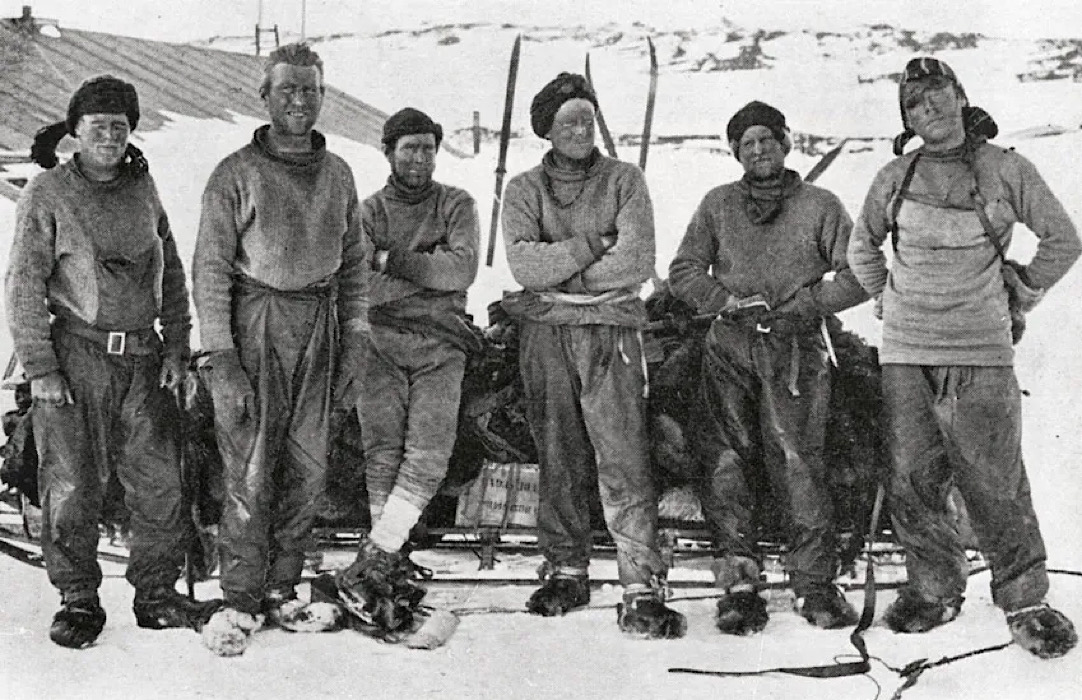 The Northern Party after their arrival at Cape Evans, Victor third from the right After the outbreak of war, Victor entered the Royal Naval Division with the rank of Commander and served as Adjutant and second in command of the Drake Battalion at Antwerp. On 19th October he was appointed to the command of Drake. At Gallipoli, on 12th June 1915, he was awarded the DSO:  Courtesy of the National Archives, ref ADM 339/3/288 On 22nd June he embarked for Imbros en route to England and was promoted to Acting Captain, RN. On 25th July his RND appointment was terminated and he was appointed to HMS Excellent for a gunnery course. On 3rd August he was gazetted as Mentioned in Despatches for his service with the Division. |
||||
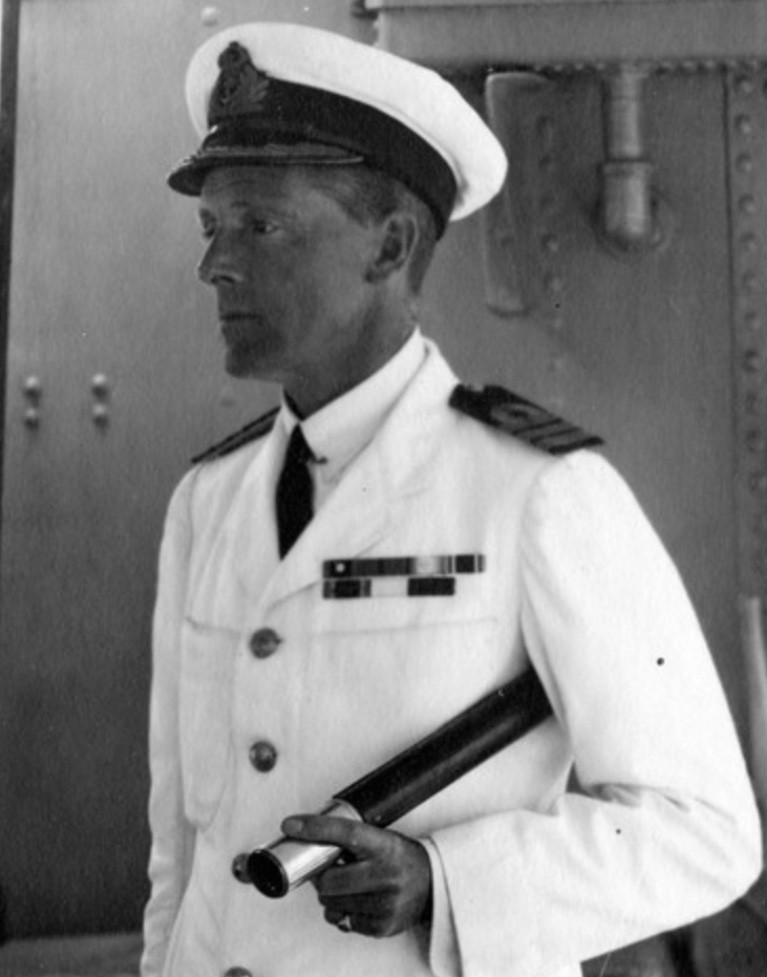 |
After leaving the Division, Victor commanded the newly launched M15-class monitor HMS M24 until May 1916 and then the Tribal-class destroyers HMS Saracen until March 1917 and HMS Recruit for around a month. He then assumed command of the M-class destroyer HMS Milne until April 1917. In May 1917 he was awarded a bar to the DSO for sinking an enemy U-boat by ramming while in command of HMS Milne. The King gave his consent to Victor being reinstated on the Admiralty’s list of active officers with the rank of Commander from 9th May 1917, and from December he commanded the Marksman-class destroyer flotilla leader HMS Marksman. For the Zeebrugge Raid on 23rd April 1918 he commanded HMS Warwick, serving as the flagship for Vice-Admiral Sir Roger Keyes. For his leadership during the raid he was again Mentioned in Despatches. During the winter of 1918–19, Victor was stationed in North Russia where he instructed the British forces in the Archangel campaign on the use of Arctic equipment. He was appointed an Officer of the Order of the British Empire for this work. After arriving back in England, Victor’s service was largely shore-based as well as outside of the Admiralty, and he retired from the Navy on 13th December 1922 at his own request. On 8th January he was appointed to the rank of Captain. He migrated to Newfoundland with his family in 1922 where he farmed and fished. In 1927 Lilian filed for divorce. In 1928 he married the Norwegian Marit Elisabeth Fabritius. |
|||
|
During the Second World War, Victor re-entered the Navy and performed administrative duties in both Trinidad and Canada. He returned to his country life after leaving the service for a final time. Victor died on 19th November 1956 and was buried at Corner Brook, Newfoundland. | ||||