The Internment Enquiry
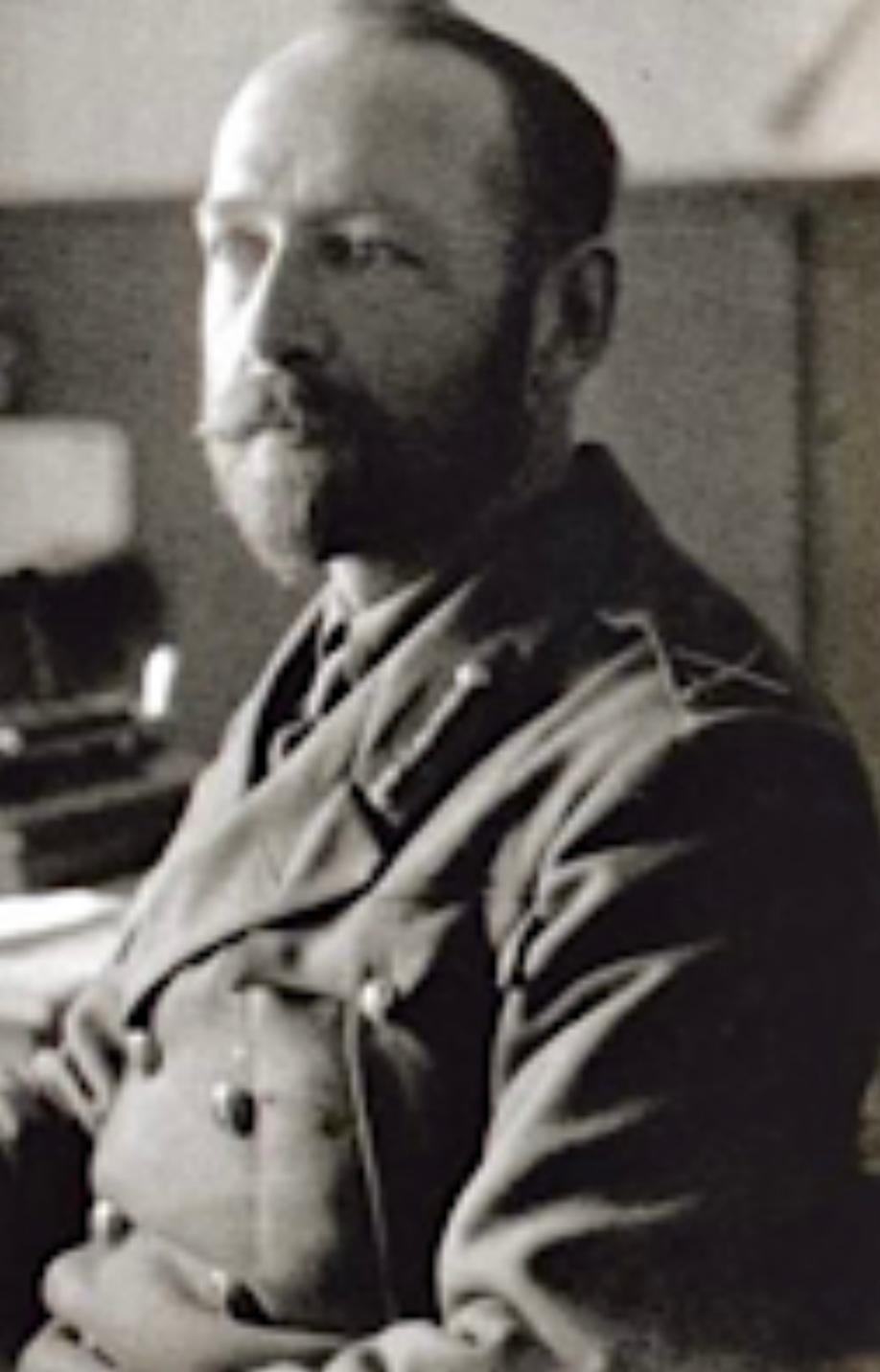
Testimony of Commodore W. Henderson
Commanding Officer, 1st Royal Naval Brigade
Initial StatementCommodore Wilfred Henderson opened his evidence by making clear that his purpose was to explain the circumstances in which the 1st Royal Naval Brigade was committed to operations in Belgium and, ultimately, driven into internment in Holland. He emphasised that the Brigade had been placed in an operational situation for which it was neither trained nor equipped, and that decisions taken during the retreat from Antwerp were made under conditions of extreme uncertainty, exhaustion, and rapidly deteriorating communications.He stated that his testimony was not intended to criticise policy at a higher level, but to show that the actions taken by himself and his officers were governed by necessity rather than choice. Throughout his opening remarks, Commodore Henderson stressed that the Brigade’s movements were dictated by fragmentary information and a lack of clear direction from above, and that responsibility for events could not be understood without appreciating those constraints. Statement by Commodore W. HendersonDerived from his Official Report of 13th October, 1914. The 1st R.N. Brigade was embodied at Walmer on 22nd August, 1914.Composition and Training Commodore Henderson described the Brigade as having been assembled with great haste and with little opportunity for proper training. It consisted largely of Royal Naval Volunteer Reserve and Royal Naval Reserve ratings, many of whom had only recently joined and had never previously trained together as formed units. A significant proportion of the senior ratings — including Chief Petty Officers and Petty Officers — were of an age that made the physical demands of sustained marching and field operations particularly arduous. |
 |
|||
|
Officers were few. There were only two active-service naval officers in the Brigade — Commodore Henderson himself and Commander Fargus — together with a single active-service army officer, Lieutenant Fletcher of the Scots Guards, serving as a battalion adjutant. The remainder were newly entered officers or emergency commissions, averaging about two per company, compared with an infantry establishment of approximately six. Commodore Henderson emphasised that this shortage of experienced officers placed an enormous strain on command and control once operations began. Clothing and Equipment The Brigade’s clothing and equipment were, by Commodore Henderson’s account, gravely deficient. Many men went into action wearing blue naval uniforms with no greatcoats, inadequate footwear, and incomplete personal equipment. Water bottles, entrenching tools, and bayonets were scarce; leather equipment was often missing or improvised. Rifles had only recently been issued, and in some cases men were still learning their use while already committed to operations. Supplies Food supply was a persistent and serious problem. Commodore Henderson stated that during parts of the retreat the men were compelled to subsist on whatever could be found locally, including turnips taken from fields. The lack of organised supply arrangements further contributed to exhaustion and reduced the Brigade’s capacity for sustained movement or combat. Divisional Headquarters A recurring theme in Commodore Henderson’s statement was uncertainty over the nature and authority of Divisional Headquarters. He indicated that it was frequently unclear whether orders originated from the First Lord of the Admiralty, from Brigadier-General Paris, or from other staff officers acting independently. This ambiguity made it difficult to assess the intent behind orders or to understand who was exercising effective command at critical moments. Testimony1. Orders for AntwerpCommodore Henderson described being ordered to proceed to Antwerp in the early hours of Sunday, 4th October, 1914, embarking under conditions of confusion and haste. He emphasised that the Brigade was dispatched with insufficient food and without horses, despite his protest that mounted officers were essential for communication and control. He was informed that the prohibition on taking horses came directly from the First Lord of the Admiralty and could not be altered. On arrival, Commodore Henderson found himself uncertain as to who held overall command. General Rawlinson informed him that he was G.O.C., while elsewhere Brigadier-General Paris appeared to be exercising authority. This uncertainty led to what Commodore Henderson later described as his “subsequent mystification as to who our G.O.C. really was”, a confusion that persisted at a critical stage of operations. 2. Antwerp and Wilrijk Upon arrival at Antwerp, the Brigade marched to Wilrijk and was almost immediately subjected to continual movement, counter-movement, and redeployment. Commodore Henderson stressed that his men were repeatedly marched and countermarched with little rest, often without food, and with communications to Headquarters steadily deteriorating. Belgian troops and civilians were already in flight, roads were congested, and information became increasingly unreliable. Reinforcements arrived sporadically and without clear coordination. Commodore Henderson drew particular attention to the reversal of the Brigades — an action he believed to have been a mistake or oversight by staff officers — which placed his Brigade in a vulnerable position and contributed materially to the later disaster. A Royal Marine Battalion was eventually sent to his position on the Military Road near the Chateau Dragon, but by this stage command cohesion had already been compromised. 3. Ollivant, Orders, and Lost Time Lieutenant-Colonel Ollivant, G.S.O. 1, arrived with instructions to retire, but Commodore Henderson described the manner in which these orders were delivered as ambiguous and unsatisfactory. Ollivant declined to take responsibility for cancelling earlier instructions and conveyed the withdrawal in a way that suggested discretion rather than certainty. No clear written order was produced, and Commodore Henderson was left unsure whether the retirement was absolute or conditional. At Groningen he learned that the 2nd Brigade had received a definite order to withdraw, exposing his own Brigade’s flank. Major Seely appeared to have taken responsibility for conveying this order to the Drake Battalion, but no corresponding clarity was provided to Commodore Henderson. Brigadier-General Paris remained out of contact, leaving him unable to coordinate his actions with the rest of the Division. He described being compelled to search the countryside for other elements of the Division without knowing their whereabouts, losing what he later called “precious hours which would have made all the difference between successful withdrawal to the coast, and the interment into which we were driven.” 4. Retreat and Decision to Enter Holland As the Brigade moved north and west, Commodore Henderson became increasingly aware that German forces were cutting off routes of retreat. Reports of enemy cavalry operating along the frontier, combined with the exhausted state of his men, convinced him that an attempt to force a passage would likely result in capture or destruction. The Brigade was no longer in a condition to engage the enemy effectively. In these circumstances, Commodore Henderson concluded that entry into neutral Holland was the only remaining course consistent with his responsibility for the lives of his men. This decision, he stated, was taken deliberately and with full appreciation of its consequences, but in the belief that all other options had effectively been foreclosed. 5. Bridges and the Loss of Mobility Commodore Henderson then addressed what he described as the most serious and blameworthy cause of the disaster: the actions of Lieutenant-Colonel Bridges. He testified that Bridges took his motor car, falsely representing himself as Brigadier-General Paris’s Chief of Staff in order to obtain it. Deprived of transport and forbidden horses, Commodore Henderson was reduced to moving on foot and was unable to ascertain the position of the rest of the Division or exercise effective control. He made clear that this loss of mobility had a decisive effect at a critical moment, compounding existing confusion and preventing timely decision-making. He further noted the bitterness of being urged to hurry forward by Bridges from the safety of the other side of the wire while he himself struggled to bring the Brigade on without transport or reliable information. 6. Summary of Causes Commodore Henderson summarised the reasons for the Brigade being cut off as: lack of information from Divisional Headquarters; the misleading and ambiguous manner in which the order to withdraw was delivered; the loss of mobility caused by Bridges’ actions; the prohibition on taking horses; and the extreme exhaustion of officers and men. 7. Concluding Observations In the closing portion of his evidence, Commodore Henderson stated that while he did not believe Brigadier-General Paris had intentionally betrayed him, the cumulative effect of Paris’s absence, Ollivant’s manner of delivering orders, and Bridges’ actions rendered effective command impossible. He also spoke of the lasting personal consequences, including the effect on his own career and that of Commander Fargus, arising directly from the events under examination. Assessment of the EvidenceCommodore Henderson’s testimony was delivered in a measured and methodical manner, yet consistently depicts a commander confronting multiple, interlocking operational disadvantages. His evidence places particular emphasis on ambiguity of command, breakdowns in communication, and the loss of mobility at critical moments.While the Court questioned him on alternative courses of action, the tone of the examination did not substantially undermine his account. His narrative makes clear that he held responsibility for the decision to enter Holland, but also identifies the actions and omissions of others — notably the manner in which orders were delivered and the conduct of Lieutenant-Colonel Bridges — as decisive factors in shaping the circumstances in which that decision was made. The absence of direct evidence from some of those whose actions are central to his account limits the extent to which his testimony could be tested. Nonetheless, Commodore Henderson’s evidence presents a coherent explanation of how cumulative failures of preparation, communication, and support converged to produce the outcome under investigation. | ||||
|
|