The Internment Enquiry
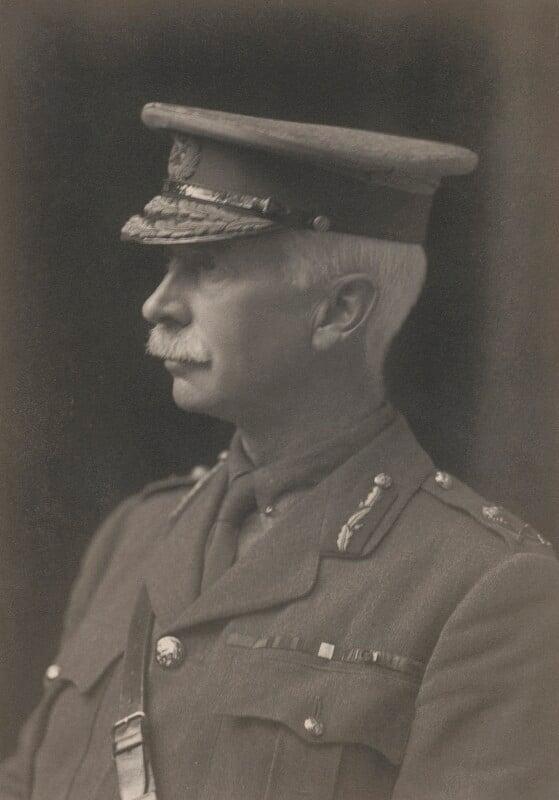
Testimony of Major-General Sir A.C.M. Paris
Commanding Officer, Royal Naval Division
First StatementArrival at Antwerp and the Initial DispositionsMajor-General Archibald Paris opened by stating that he arrived at Antwerp with the Royal Marine Brigade, strength under 3,000 all ranks, during the night of 3/4th October, 1914. During the forenoon of 4th October he occupied trenches and posts facing Lierre, covering a sector from the river and roads near Donk to the railway. Belgian units were placed under his command at various times. Bombardment was already in progress and increased in violence as time went on. He described a deteriorating tactical position on 5th October, with German infantry driving in advanced posts and crossing the Nethe. A successful counter-attack restored the situation temporarily, but pressure and bombardment continued. An unsuccessful counter-attack on 6th October caused what he described as immense confusion, and the position became untenable, forcing a retirement to Vremde during the forenoon. It was around this stage, he said, that he learned of the approach of the two Naval Brigades and that they were to be placed under his command. He noted that they did not begin to arrive in Antwerp until the night of 5/6th October. His first intention was to bring both Brigades up, but he eventually ordered the 1st Brigade up on his right (arriving about 4 p.m.), while the 2nd Brigade held the line of forts between Forts 1 and 7 to cover any further retirement. |
|
|||||||
|
General Paris stressed that he had not met any of the commanding officers of the Naval Brigades prior to these events, and that before leaving England he had had no idea that he would be placed in command of the Division. He nonetheless managed to hold a necessarily short conference during the afternoon of 6th October with some senior naval officers. At this conference he raised withdrawal from Antwerp as a possible contingency, and recommended that commanding officers reconnoitre routes to the southern (pontoon) bridge in case a night withdrawal became necessary. He emphasised that this was not an “order”, but a precaution against what appeared a possible contingency. The Ground Held and its Disadvantages General Paris gave a description of the position occupied by the Division: eight forts, roughly 500–700 yards apart, covering the south and east of Antwerp, with the right flank resting on the Scheldt, and inundation and neutral territory to the north of Fort No. 1. The ground in front had been cleared, and there was a formidable wire entanglement within short range. Belgian troops held the forts, while the intervals from No. 2 to No. 7 were occupied by the two Naval Brigades. He then set out the disadvantages. There could be no concealment; forts and trenches were excellent artillery targets. The forts were ill-armed and poorly supplied with ammunition. The trenches were wide and shallow, with no dug-outs or head cover. Tools and materials were hard to obtain, and he noted that the Division brought practically none. Communications, except in the open, were essentially nil. The Bombardment, Decision to Withdraw, and the Written Order General Paris stated that bombardment of the city began during the night 7/8th October and increased in violence through the day, causing damage and flight of inhabitants. He moved his headquarters to remain in close touch with General De Guise, and the situation, he said, rapidly developed for the worse. At a final conference held about 5.30 p.m. he decided the situation was hopeless and he must, if possible, save the Naval Division from inevitable surrender. De Guise concurred entirely, remarking, as General Paris recalled, that it was finished and his men were worn out. General Paris stated that he succeeded in telephoning the Admiralty and informed the First Lord of his proposed action. He also noted that Belgian sources had earlier reported the enemy crossing the Scheldt above Antwerp and moving north to surround the fortress, increasing his anxiety. General De Guise promised every support to assist the retreat and issued strict orders to clear streets and bridges. This enabled General Paris to use two bridges instead of one and, crucially, facilitated the retirement of the 1st Brigade by the use of the main road and permanent bridge. It was now getting dark, and General Paris decided to withdraw as far as possible simultaneously. He stated that the orders were written by Brigadier-General (then Colonel) Richardson, with three carbon copies. One copy each was given to Colonel Seely, Colonel Ollivant, and Major Sketchley. Colonel Seely was to inform the 1st Brigade, Colonel Ollivant the Royal Marine Brigade, and Major Sketchley the 2nd Brigade. General Paris stated that the original order was later sent to the Admiralty with his remarks on Commodore Henderson’s report, and at the time of the Enquiry he had been unable to trace it. He was clear that it was short, and that it explicitly stated:
Movement to Zwyndrecht and the Confusion of the Roads General Paris described allocating duties to the remaining staff officers while he himself went to the pontoon bridge to await troops. When the 2nd Brigade crossed in good order he moved to Zwyndrecht. By this time there was great confusion on the roads with refugees, carts, and animals. All movement was in the same direction, so progress, though slow, was possible, but intercommunication while on the march was out of the question. At the rendezvous he received reports from various officers, including one stating that the 1st Brigade was present. He noted that the overriding object was to get men onto trains and away, and that some trains left early and not full because of anxiety to move every train. Those not entrained continued marching. The enemy’s position disrupted rail movement, diverting trains and forcing further marching by exhausted men. He testified that the men behaved well under trying circumstances. He himself, with two staff officers, motored to Bruges, believing the Division largely intact, and only learned the true state of affairs the following day. Times: a Second Statement not Sworn To General Paris then drew a clear line between what he would swear to from personal knowledge and a second statement attempting to fix times. He was explicit that he was not prepared to swear to these timings and that he believed some were open to doubt. He read them nonetheless, describing the likely window in which orders were issued and received, and the approximate timings of key movements, while maintaining his reservation that these were reconstructions rather than certainties. TestimonyGeneral Paris reiterated under questioning that three staff officers were sent to inform the three brigades, and that they were sent with definite orders to the different brigades. He explained that Colonel Richardson wrote the order in his notebook with carbon copies, that General Paris read the order out loud to the three staff officers, and that each took a carbon copy away with him.He was pressed on the nature of this duty. General Paris stated that the definite intention was that these staff officers would go to each brigade headquarters, and that they would hand over the written order, or at the very least communicate it verbally and personally to the commanding officer of each brigade. He confirmed that, subsequently, he was of the opinion this had been done. A crucial exchange followed on whether he verified that Colonel Seely had delivered the order to Commodore Henderson. General Paris replied that he did not question Colonel Seely as to whether he had given Commodore Henderson the orders; he assumed it. He stated that he was perfectly convinced that Colonel Seely reported to him at Zwyndrecht that the 1st Brigade was present, Zwyndrecht being the appointed rendezvous, and that he was perfectly convinced Colonel Seely told him so. General Paris also reiterated that his order to retire was to be acted upon immediately upon receipt — the retirement commencing on receipt of the order — and that he expected retirement to begin around seven o’clock. He described the intended withdrawal as more or less simultaneous, with screens left as the brigades withdrew, and he stated that he was perfectly certain the order mentioned the gate by which each brigade should enter and the bridge to be used, as he had read it out to the staff officers before they departed. Under questioning, General Paris also gave evidence that sheds light on uncertainty at the top of the command structure. His account highlights that at this early stage of the Division’s existence, even those in authority were not always clear who was effectively commanding at a given moment, and his reference to having telephoned the Admiralty and informed the First Lord illustrates the direct involvement of Winston Churchill in the affair. He returned at points to practical conditions affecting the troops: the poor quality of trenches, scarcity of tools and material, and the general lack of equipment and supplies. Such deficiencies, combined with heavy marching and confusion of roads, contributed to fatigue and reduced the capacity of units to move promptly and coherently once withdrawal began. General Paris' testimony further indicates that he only became aware that the 1st Brigade had gone astray after the event, having believed at the time — on report — that the brigade had reached the rendezvous and that the Division was substantially intact. His evidence therefore rests heavily on what he was told at Zwyndrecht, rather than what he personally saw of the 1st Brigade’s movement from the trenches and through Antwerp. Assessment of the EvidenceGeneral Paris' evidence is valuable for setting out the intended mechanism of withdrawal: a written order drafted and copied, read aloud to the messengers, and carried by named staff officers to named brigade headquarters, with the retirement to commence upon receipt. His statement is methodical in its description of the position held, its strengths and disadvantages, and the reasons that drove the decision to withdraw.At the same time, his testimony reveals how dependent the system was upon assumptions once darkness fell and communications became impossible. He did not verify personally that the order had been delivered to Commodore Henderson, and his belief that the 1st Brigade was present at Zwyndrecht appears to have been based on report — specifically, what he was convinced Colonel Seely told him — rather than on direct confirmation. This sits uncomfortably beside the reality that the Brigade was not, in fact, present as believed. A further limitation is General Paris' own distinction between what he would swear to and what he would not. His first statement is offered as personal knowledge; his second statement, attempting to fix times, is explicitly presented as uncertain and not sworn to. This candour strengthens his credibility in one respect, but also illustrates the difficulty of reconstructing the chronology with precision from memory under such conditions. Responsibility in General Paris' account is not framed as a simple matter of one decision. Rather, he depicts a breakdown in which inadequate communications, confusion of command, deficient preparation and equipment, and the reliance on staff transmission of vital orders combined to produce catastrophic misunderstanding. His evidence therefore places heavy weight on the proper delivery and acknowledgment of the written withdrawal order — and, by implication, on those who were tasked with carrying it to the brigade headquarters and reporting its completion. | ||||||||
|
|
|