January 1917 ... Back to the Ancre
|
Behind the lines, the Royal Naval Division was reorganised and retrained. Returning to Englebelmer on January 18th, the 188th and 189th Brigades relieved the 11th Division in the trenches of the Ancre near the German-held town of Grandcourt. The line at this point had been pushed forward since the November battle but was still below the crest of the ridge that dominated Grandcourt. Over the next few days, the shelling experienced by the Division intensified both in the trenches and in the rear areas. On the twenty-fourth, the enemy attacked the 188th's front and gained a lodgement, but this was eventually driven back. Shortly after this, a raid by the 2nd RMLI captured an advanced German position overnight, but a similar attempt the following evening was unsuccessful.
On February 3rd, the 189th Brigade attacked along the northern bank of the Ancre. The objective was to advance the line on this side of the river to a level with the Grandcourt strongpoint to the south. At 23:00, the Hood Battalion advanced to the right of Hawke following a short but highly effective barrage. The Nelson Battalion was in support. It was three hundred yards to the first trench, and this was easily reached, but a machine-gun position on the Hawke front proved to be the focus of stiff resistance. No frontal assault was attempted; instead, the units moved around it with the intention of isolating the position and making it untenable. In the darkness and with complicated manoeuvres, the units became confused about their positioning. Hood became aligned parallel to the Ancre, but Hawke successfully consolidated the left flank, which was expected to be heavily defended. The enemy maintained a lodgement between the two battalions, as Nelson had failed to link up with Hawke. The Hood Battalion was manoeuvred to attain the correct alignment, and by dawn the attack had successfully achieved all its objectives and taken both of the enemy trenches. The enemy still held a position between the two battalions, and the machine-gun strongpoint was preventing proper consolidation of the left. Several attempts were made on this latter position throughout the morning, but all were resisted. At 15:50, the Hawke and Nelson battalions launched an assault, which was successful, and only the lodgement between the battalions remained. At 19:00, Hawke, assisted by Nelson, attacked the strongpoint between the battalions. At the same time, the Germans launched a counterattack, which broke through the right of Hood, capturing an advanced position. An intense German barrage fell on both flanks of the Division and the captured positions, resulting in numerous casualties. By 20:00 it was quiet again, and once more Hood attempted to link up with Hawke but, due to the state of the trenches and the loss of several officers, the patrol ended up in a German line. The gap had been reduced, but it still existed. At dawn on the fourth, another attack was launched against the strongpoint, which was successful, and the two battalions were able to link up. Once captured, it was discovered that the position had been very heavily defended by a large number of riflemen in addition to the machine-gun and also contained a garrison. Shortly after, Hood recaptured the position it had lost the previous day in the counterattack. The attack had been successful, but casualties were extensive at 671, with a very high proportion of men killed. As the 190th Brigade relieved the 189th on the night of the 5th-6th, two patrols of Howe pushed into Grandcourt on the other side of the river. On entering the town, it was found to have been evacuated by the enemy, and the following day two companies of the 2nd RMLI were ordered to occupy Grandcourt, where they dug themselves in two miles ahead of the original line. On the eighth, the 190th Brigade advanced the line 600 yards and captured the heavily fortified stronghold of Baillescourt Farm. The skill with which these advances had been achieved was greatly praised, and a letter was received from Sir Douglas Haig congratulating the Division. Thomas, having recovered from his chest wound, rejoined his unit on the twelfth, and the 188th Brigade moved into the trenches at Beaucourt. The 2nd and 18th Divisions were to capture the hill covering the southern approaches to Miraumont, and at the same time, the 1st RMLI and Howe Battalions were to seize a portion of road to the west of the town. The Hood Battalion was in reserve, and two companies of the 2nd RMLI had been attached to the 1st to assist in consolidating the extension of the defensive flank. At 05:45 on the seventeenth, the attack was launched behind a creeping barrage. With the Howe Battalion on the right, its flank was protected by the advanced positions of Anson, who had relieved the 190th Brigade at Baillescourt Farm. The 1st RMLI was subjected to a barrage before the attack commenced and sustained considerable losses. After heavy fighting, the Division achieved all its objectives and secured positions on the road from Baillescourt Farm. Ferocious fighting led to the capture of the exceedingly strong point known as the Pimple; division medics described how the casualties of the enemy littered the ground all around. The Division suffered 176 men killed in action during the day's fighting, with the Howe and 1st RMLI battalions sustaining 139 of this total. The Division had endured casualties throughout the build-up to this attack and would continue to do so until its withdrawal from the line. Even then, men would continue to die from the wounds they had received. | ||||||||
|
On the eighteenth, a large German force counterattacked but was annihilated by a barrage and the Division's machine-guns. As this ground was tactically important, the enemy counterattacked again the following day. A barrage was again ordered, and the assault was repulsed once more. The advance to the ridge had not been so successful. It had been anticipated by the enemy and was subjected to a heavy barrage hours before the attack, but the line still managed to advance to an extent.
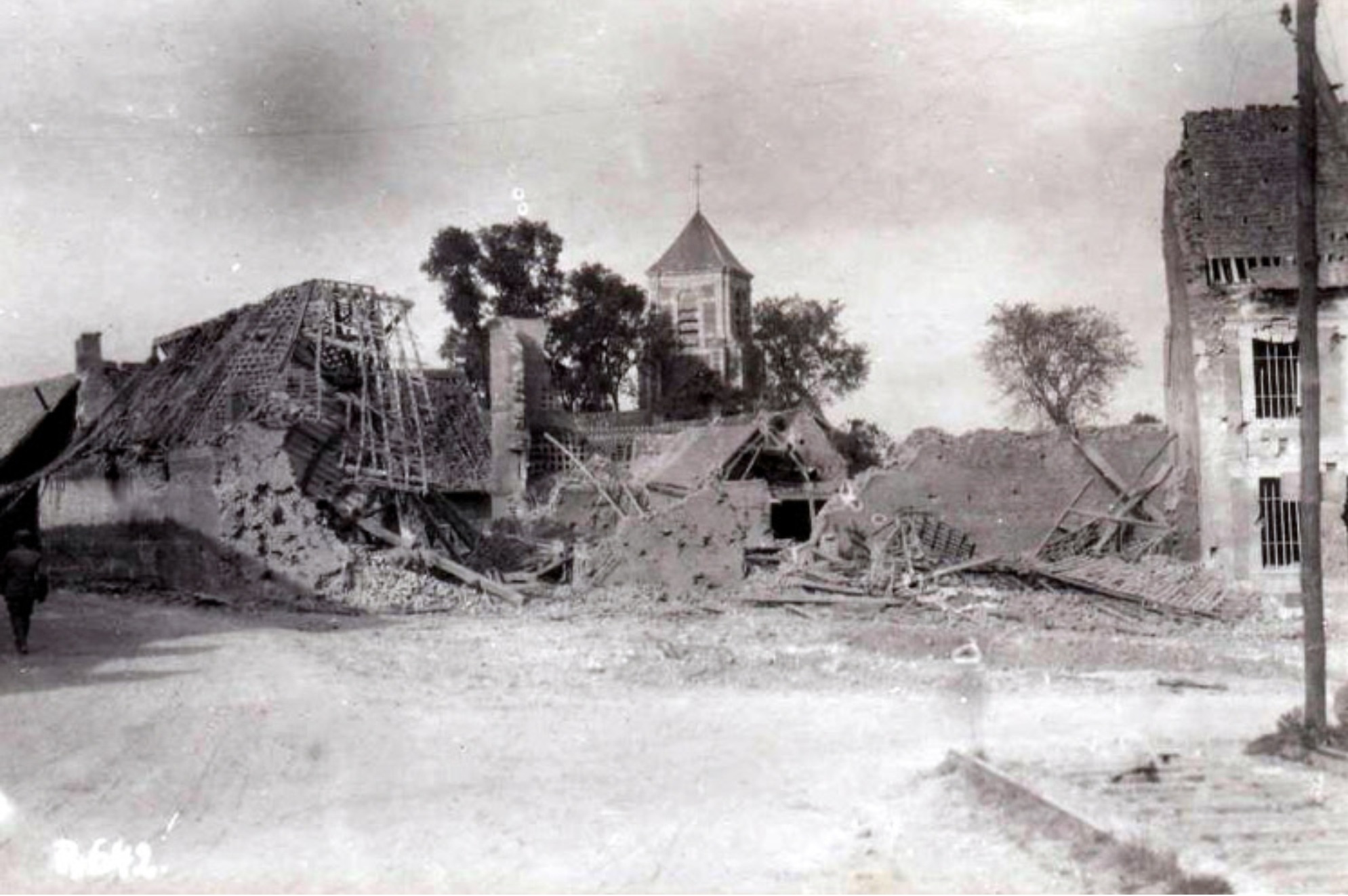
On the night of the 21st-22nd, the 190th Brigade relieved the 188th and sent patrols forward on the twenty-third and twenty-fourth. The patrols encountered no resistance and occupied Miraumont the following day. On the twenty-sixth, Gudgeon Trench was taken with relative ease. The advances made by the attack led to the Germans evacuating Pys. Allied occupation of Miraumont made the German hold on Serre untenable, which in turn made Gommecourt and Puisieux-au-Mont impossible for the Germans to hold, the enemy having evacuated all the towns by the twenty-eighth. By March 2nd, the Germans had fallen back to the Le Transloy–Loupart line. |
 | |||||||
| The Division was relieved by the Vth Corps and returned to Englebelmer. General Gough, Fifth Army Commander, congratulated all ranks of the Royal Naval Division in routine orders for both the nature of their preparation and the manner in which the actions were carried out. It stated that 619 prisoners had been taken and that the devotion to duty and bravery of all were splendid, and all had enhanced the high reputation of their units. Sir Douglas Haig sent a congratulatory telegram to the Division. On the nineteenth, Major-General C. Lawrie replaced General Shute as the Division's commander, and he proved to be more popular with the ranks of the Division. | ||||||||
 |
Behind the lines, the roads had been decimated by shelling, and the Royal Naval Division was attached to the Canadian Railway Company to repair them and construct new railway lines. This work was again commended by General Gough, as it enabled guns, ammunition, and other supplies to be moved forward to continue the advance. The Division retired in mid-March for rest at Ovilliers.
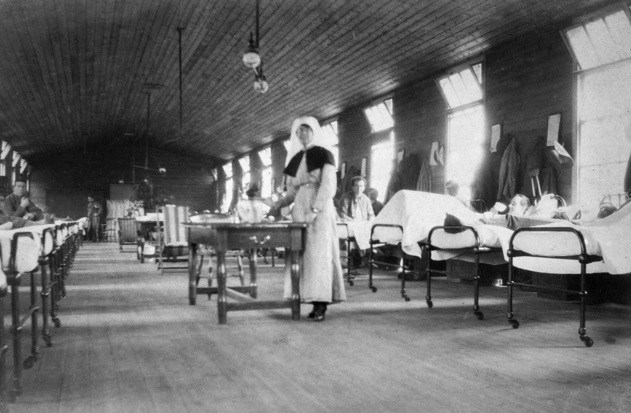
During this time in the rear areas, on March 16th, Thomas was diagnosed with trench fever. This disease is rarely fatal but has wide-ranging symptoms, including headaches, skin rashes, inflamed eyes, and extreme leg pain. It affected all armies, but it was only in the final year of the war that the excretion of lice was identified as the cause, with the bite of the louse transmitting the disease. Patients usually recovered after five or six days, although prolonged hospitalization for several weeks was common. Thomas would prove to be one of these latter cases. On the eighteenth, the Division was moved back to Hedauville and then on to the Busnes lines north of Arras. The health and morale of the men began to improve as they moved to the new positions. Thomas was admitted to the 8th Stationary Hospital at Wimereux on the nineteenth. | |||||||
|
||||||||